|
|
|||||
|
coLABoratory:
A Groundbreaking 'R & D' Lab
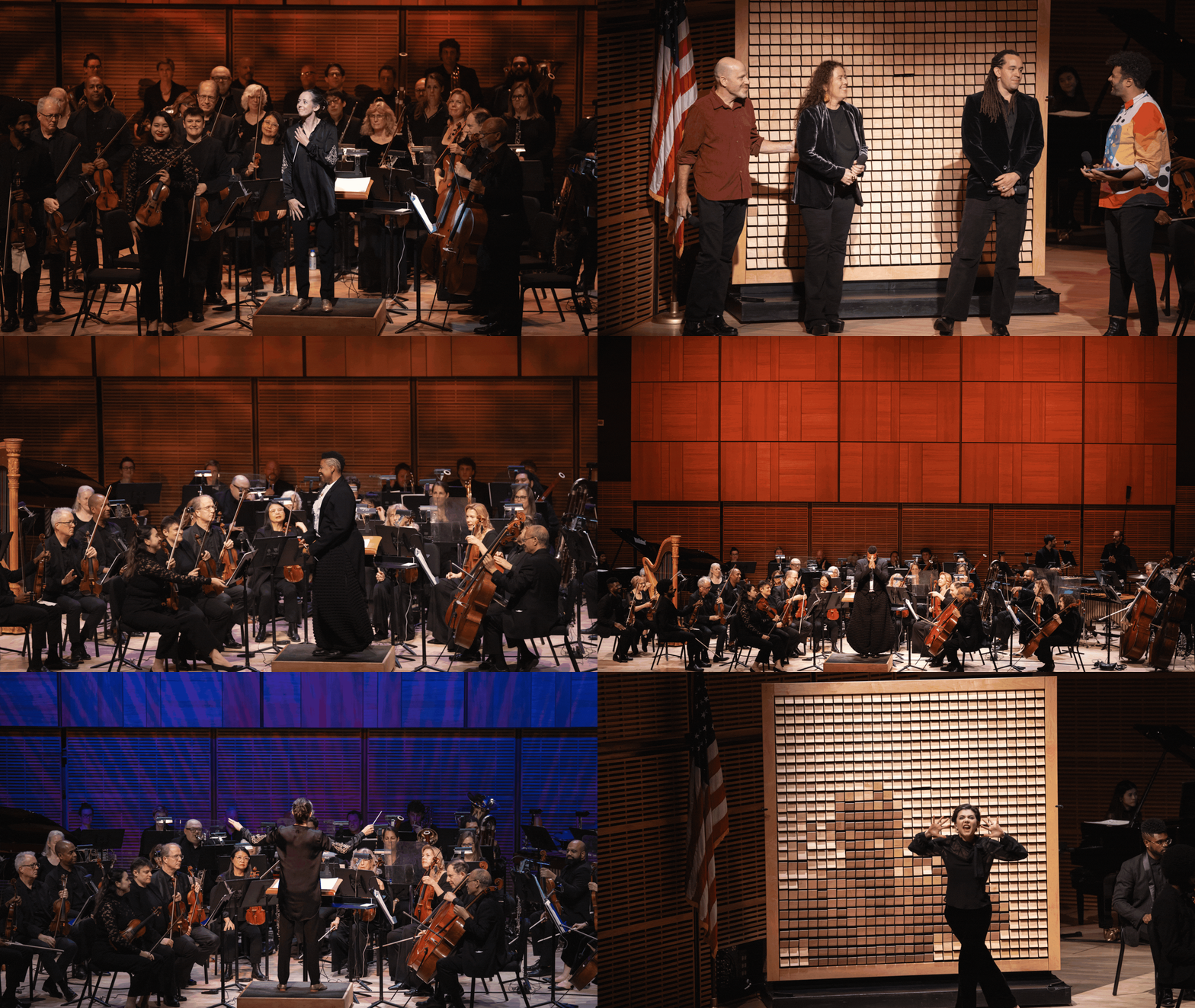
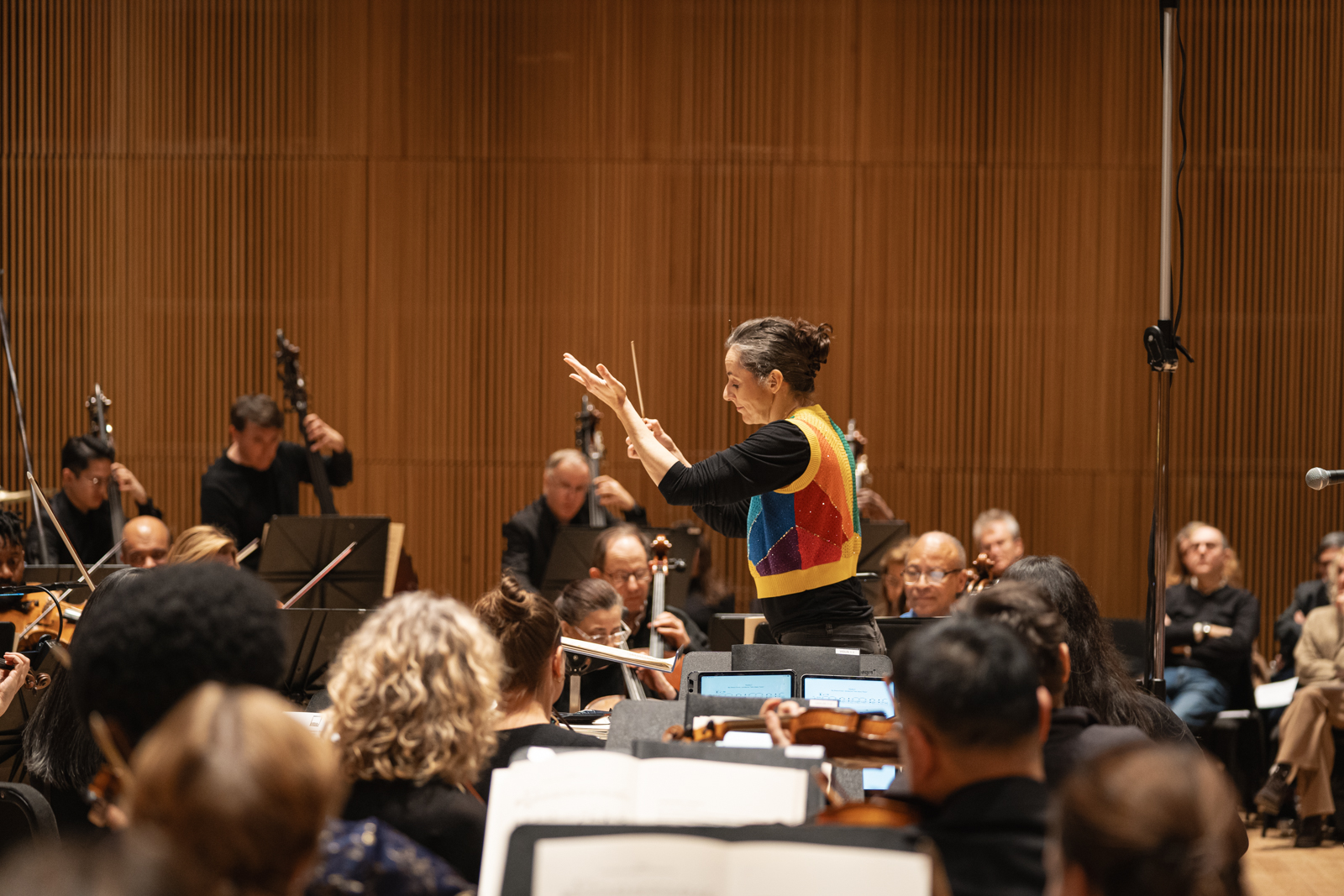
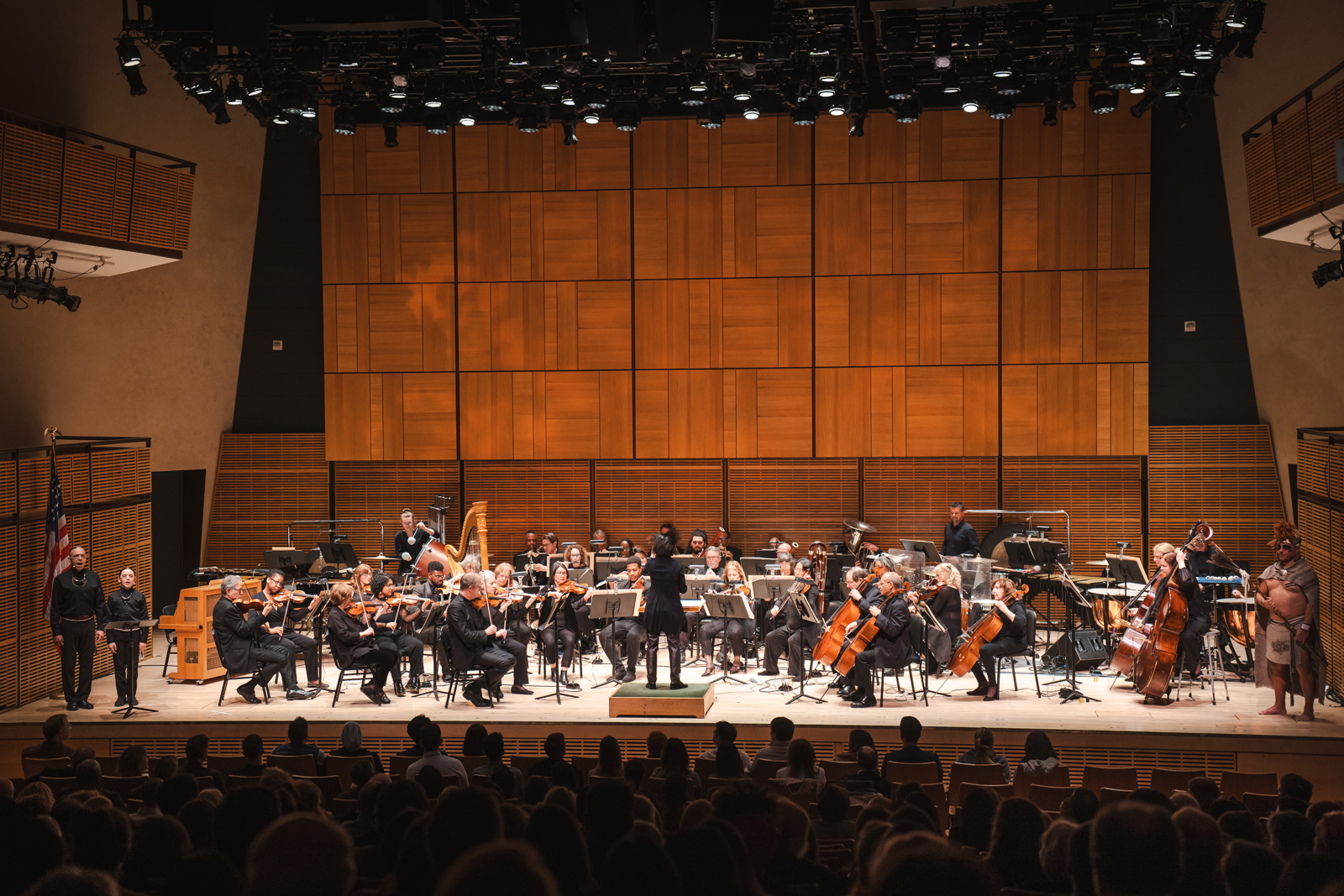
Announcing the 2012-2013 installment of coLABoratory: Playing It UNsafe, the first and only professional research and development lab to support the creation of cutting-edge new American orchestral music through no-holds-barred experimentation, encouraging composers to do anything but play it safe.The composers participating in coLABoratory this season are Du Yun, Troy Herion, Raymond J. Lustig, Judith Sainte Croix, and Dan Visconti, selected from a national search for their willingness to experiment and stretch their own musical sensibilities, and their ability to test the limits of the orchestra. This season, coLABoratory will include a unique incubation process of workshops, public readings, collaborative feedback, and laboratory performances of music, open to the public, taking place from November 2012 through April 2013. Each composer's work is developed with the orchestra over the course of the season in a process that includes ACO's Music Director George Manahan, ACO's artistic leadership Robert Beaser and Derek Bermel, mentor composer Morton Subotnick, plus ACO advisors and members of the orchestra..
Born and raised in Shanghai, China, currently based in New York, Du Yun is an internationally-performed composer and musician. Hailed by The New York Times as "cutting-edge" to whom the term young composer could hardly do justice", and "an indie pop diva with an avant-garde edge;" "re-invents herself daily" so does her music," (Time Out New York), her music exists at an artistic crossroads of chamber music, theater, pop music, opera, orchestral, cabaret, storytelling, visual arts and noise. Du Yun has received commissions include from the Detroit Symphony Orchestra, the Carnegie Hall Weill Institution Commission, the Mann Center for the Performing Arts, the Whitney Museum Live, the Fromm Foundation, Meet the Composer, violinist Hillary Hahn, cellist Matt Haimovitz, flutist Claire Chase and many more. An alumna of Shanghai Conservatory of Music, Oberlin College (BM), Harvard University (MA, PHD), she has served on the faculty of SUNY-Purchase since 2006. Slow Portraits will investigate a fixed point in orchestral sound, a gradient palette underneath a hyper-slow movement. Du Yun's starting point will be a sound design she created for visual artist David Michalek's "Portraits in Dramatic Time." She explains, "While the music, mostly as sound design at the time, was broadcast over WiFi to the public, I was hoping I could write for an acoustic chamber orchestra to truly investigate the detailed nuance relationship between the acoustic world and the visual processing image, that both are not digitally altered a bit. For the music, I wonder what I could do to showcase a frozen phrase, elongated gestures elongated, without any digital aid. Like a glacier, things are never quite frozen."Du Yun: Portraits (excerpt)
Troy
Herion:
Troy Herion is a composer and filmmaker whose work unites contemporary music with visual arts through chamber and orchestral music, opera, theater, and film. He explores the concept of "visual music:" the idea that musical qualities are found in visual as well as aural experience. His visual-music film Baroque Suite was called "marvelous" by New Yorker critic Alex Ross and has been screened at the Brooklyn Film Festival, The Wassaic Project, and during ACO's SONiC festival in October 2011. His music video directing debut - The Bright Motion for pianist Michael Mizrahi on New Amsterdam Records - was released to critical acclaim on the music blogs NPR Classical and The Rest is Noise. Herion's concert works have been performed by leading ensembles including So Percussion, Nash Ensemble of London, and the Brentano Quartet. As a composer for theater, he has worked with Pig Iron Theatre, The Wilma Theater, The Arden Theatre, Azuka Theater, Swarthmore College, and Columbia University. He was nominated for three Barrymore Awards, including the prestigious F. Otto Haas Emerging Artist Award, and his sound design was featured in the 2011 Prague Quadrennial. Herion holds an MFA from Princeton University, where he is pursuing a joint PhD in Composition and Interdisciplinary Humanities.
In New York City Symphony,
Herion will make visible the elements of music - phrasing, counterpoint,
rhythm, and harmony. He explains, "New
York City Symphony is a visual-music film and composition that unites
contemporary orchestral music with images of New York's urban landscape.
Inspired by synaesthesia - where one sense becomes intertwined with, even
indistinguishable from, another - this composition invites the audience to
see sound and
hear images." Drawing
inspiration from early 20th-century city-symphony films,
New York City Symphony will treat the living, breathing organism of
the city as its subject. Seen through the eyes of a composer/filmmaker,
the metropolis is transformed into a multi-sensory musical symphony.
Click here to view some of Troy's latest video work. Troy Herion: Sextet (Prelude)
Raymond J. Lustig: Latency Canons
Raymond J. Lustig has won ASCAP's Rudolf Nissim Prize, the Aaron Copland Award from Copland House, the Juilliard Orchestra competition, the New Juilliard Ensemble competition, and several ASCAP Plus Awards. His music has been presented in venues ranging from New York City clubs and galleries to major concert halls and festivals around the world - from Le Poisson Rouge and the Stone to Lincoln Center's Alice Tully Hall and the Ecole Normale in Paris. His UNSTUCK for orchestra was recently released on Albany Records with Emily Freeman Brown and the Bowling Green Philharmonia. Lustig's teachers have included John Corigliano, Robert Beaser, and Samuel Adler. Also a published researcher in molecular biology, Lustig is deeply inspired by science, nature, and the mind. He lives in New York and teaches at The Juilliard School. Latency Canons will make intentional use of the indefinite time interval and incremental canons that can arise from latency - the slight delay that occurs in signal transmissions - through a performance via videoconferencing. Lustig says, "The cycle of lateness will be ever-increasing, as each musician tries to play along with the delayed version of what their remote counterpart has played, in an unstable feedback loop. This will work with parts of the orchestra onstage while other parts are offstage on camera, possibly even in another city or country and possibly with a sister ensemble or players in a faraway place. The piece will require two or more laptops (depending on the number of "voices" in the canons) equipped with Google+ Hangouts videoconferencing application, microphones, amplification, and AV projection to an overhead screen that will allow the players and the audience members to view the voices of the canon."Raymond J. Lustig: Medley (excerpt)
Sainte Croix's Vision V will integrate three non-orchestral
instruments into the orchestra by the
Sonora Trio: the populist electric guitar
played by Oren Fader, ancient
pre-Columbian flutes played by
Andrew
Bolotowsky, and the non-ordinary sound palette of the
synthesizer played by the composer. Abstract digital imaging suggesting the auras of the
musicians photographed during rehearsal, will play along with the music in
the concert. Vision V is the fifth in a series of compositions by
Sainte Croix, the first for full orchestra, which combines traditional
classical instruments with indigenous instruments of the Americas. The
digital images used in the piece will be derived from photography by
Claudia Miranda with design support from Marcelo Mella.
Judith Sainte Croix: Trio Dance
Composer Portrait of Judith Sainte Croix
Dan
Visconti's
music has been commissioned by ensembles including the Kronos
Quartet, the Da Capo Chamber Players, the Minnesota Orchestra, the
Albany Symphony, and the Berlin Philharmonic Scharoun Ensemble, at
venues such as Carnegie Hall, Alice Tully Hall, the Kennedy Center
for the Performing Arts, and LA's Disney Hall. His compositions
have been honored with the Berlin Prize, the Bearns Prize from
Columbia University, and the Cleveland Arts Prize; awards from BMI
and ASCAP, the American Academy of Arts and Letters, the Society
of Composers, and the National Association of Composers USA; and
grants from the Naumburg Foundation, the American Music Center,
the Barlow Endowment, the Fromm Foundation, Meet the Composer, the
National Endowment for the Arts, the Bascom Little Fund, the
Annenberg Foundation, and Chamber Music America. He has also been
the recipient of artist fellowships from the MacDowell Colony,
Copland House, the Lucas Artists Program at Villa Montalvo, and
the Virginia Commission for the Arts. Visconti studied composition
at the Cleveland Institute of Music and the Yale School of Music,
primarily with Margaret Brouwer, Aaron Jay Kernis, Ezra Laderman,
and Zhou Long. He is a member of BMI and currently resides in
Washington, DC, where he serves as artistic director of DC's VERGE
Ensemble. Visconti's Glitchscape will be created in collaboration with experimental filmmaker Simon Tarr, and will blend instruments of the orchestra with sounds from obsolete analog technology. The piece will explore the interaction of live acoustic instruments with sounds created on modified vintage Speak & Spell and Speak & Read toys, and an old "noisebox" from the 1950s. Visconti says, "This new work will create a unique texture through reimaging familiar, nearly-forgotten sounds: an exploration of the expressive power of obsolescence." Dan Visconti: Black Bend (excerpt) Lab workshops are your opportunity to be a part of the experiment. Explore the creative process as composers and their collaborators, the conductor and orchestra, develop cutting-edge new music over the course of the season. Lab workshops are free; reservations recommended.
LAB Workshop II (Dec 13, 2012) LAB Workshop III (Jan 22, 2013)
LAB Workshop IV (Mar 5, 2013)
LAB Workshop V (Apr 2, 2013) ACOs CoLABoratory: Playing It UNsafe is made possible with public funds from the National Endowment for the Arts and by the Fromm Music Foundation.
|
||||